Under-bed LED strip lighting offers a practical and aesthetic solution for enhancing a bedroom environment. This article explores the various aspects of implementing and utilizing this lighting technique.
Under-bed LED strip lighting Shewarek , often referred to as underglow or bed frame lighting, involves attaching flexible strips of light-emitting diodes to the underside of a bed frame. These strips emit light that diffuses upwards or outwards, depending on placement, illuminating the space around the bed. The technology relies on semiconductor light sources, known for their energy efficiency and longevity.
Types of LED Strips
The market offers a range of LED strip types, each with distinct characteristics impacting functionality and aesthetic outcome.
- Single Color Strips: These strips emit a fixed color of light, such as warm white, cool white, or a specific hue like blue or red. They are straightforward to install and operate, often controlled by a simple on/off switch or dimmer. Their simplicity appeals to those seeking a consistent lighting effect without complex customization.
- RGB Strips: Red, Green, and Blue (RGB) strips combine individual red, green, and blue LEDs in varying proportions to produce a spectrum of colors. This versatility allows users to change the ambiance to suit their mood or occasion. RGB strips typically come with remote controls or smartphone applications for color selection, brightness adjustment, and sometimes pre-programmed lighting modes.
- RGBW/RGBWW Strips: These advanced strips incorporate an additional white (W) or warm white (WW) LED alongside the RGB components. The dedicated white LED provides a purer white light than a mixed RGB white, which can sometimes appear slightly tinted. RGBW/RGBWW strips offer greater flexibility, allowing for vibrant colors and also functional white light.
- Addressable LED Strips: Unlike standard RGB strips where all LEDs operate uniformly, addressable strips allow individual LEDs or segments to be controlled independently. This capability enables dynamic lighting effects, such as chasing patterns, fading sequences, and elaborate animations. While offering extensive customization, these strips often require more intricate controllers and programming knowledge.
Power Requirements and Safety
LED strips operate on low voltage, typically 12V or 24V DC, through a power adapter that converts standard household AC power. Ensuring the power supply unit matches the voltage and wattage requirements of the LED strip is crucial for safety and optimal performance. Overloading a power supply can lead to overheating and potential fire hazards. Adhering to manufacturer guidelines for installation and power consumption is paramount.
Installation Considerations
Proper installation is key to both the functionality and visual appeal of under-bed LED lighting. Planning before attachment can prevent common issues.
Measurement and Sizing
Before purchasing, accurately measure the perimeter of your bed frame or the specific sections you intend to illuminate. LED strips are often sold in reels of varying lengths, typically 5 to 10 meters, and can usually be cut at designated points (marked by copper pads) to fit specific dimensions. Conversely, connectors can be used to extend shorter strips. Consider whether you want the lighting to extend along all four sides of the bed or only specific sections, such as the sides or the footboard.
Mounting Techniques
The most common mounting method involves the adhesive backing present on most LED strips. This backing is typically a strong double-sided tape that adheres to clean, dry surfaces.
- Surface Preparation: Before applying the adhesive, thoroughly clean the underside of the bed frame with rubbing alcohol to remove dust, grease, or debris. A clean surface ensures maximum adhesion.
- Adhesive Application: Peel a small section of the protective backing from the strip and press it firmly onto the prepared surface. Gradually peel more backing while pressing the strip along the desired path, ensuring it is straight and securely attached.
- Alternative Mounting: For textured or non-adhesive-friendly surfaces, or for added security, mounting clips can be used. These small plastic clips are screwed or glued to the bed frame, and the LED strip snaps into them. This method provides a more permanent and robust installation, especially in areas subjected to movement or friction.
Cable Management
Effective cable management is crucial for a tidy appearance and to prevent damage to the wiring.
- Power Supply Placement: Position the power adapter and controller (if applicable) in an inconspicuous location, such as tucked behind the headboard or beneath the bed, ensuring adequate ventilation to prevent overheating.
- Routing Cables: Use cable ties, adhesive clips, or spiral wrap to secure excess wiring along the bed frame. Route cables directly along structural elements to keep them out of sight and away from potential snags or foot traffic. For beds with slatted bases, wires can often be threaded through or along the underside of these slats.
- Minimizing Visible Wires: The goal is to make the lighting appear as if it emanates naturally from the bed, without visible wires. Strategic placement of the controller and power supply can significantly contribute to this aesthetic.
Controller and Sensor Integration
Many LED strip setups include a controller for managing color, brightness, and effects.
- Remote Controls: Infrared (IR) or radio frequency (RF) remote controls are common, offering convenient adjustment from a distance. IR remotes require a direct line of sight to the receiver, while RF remotes can operate through obstructions.
- Smartphone Apps: Bluetooth or Wi-Fi enabled controllers allow for smartphone control, often providing a more intuitive interface and advanced features like scheduling, music synchronization, and custom color palettes.
- Motion Sensors: Integrating a motion sensor can transform static lighting into a functional ambient light source. When mounted near the bed, the sensor can trigger the lights to turn on automatically when motion is detected, such as when someone gets out of bed at night. This provides safe passage without needing to switch on brighter room lights, minimizing disturbance. The lights can then be set to turn off automatically after a set duration of no motion.
Aesthetic and Functional Benefits
Under-bed LED lighting is more than just decorative; it offers tangible improvements to a bedroom’s utility and atmosphere.
Enhancing Ambiance
The primary appeal of under-bed lighting lies in its ability to transform a room’s atmosphere.
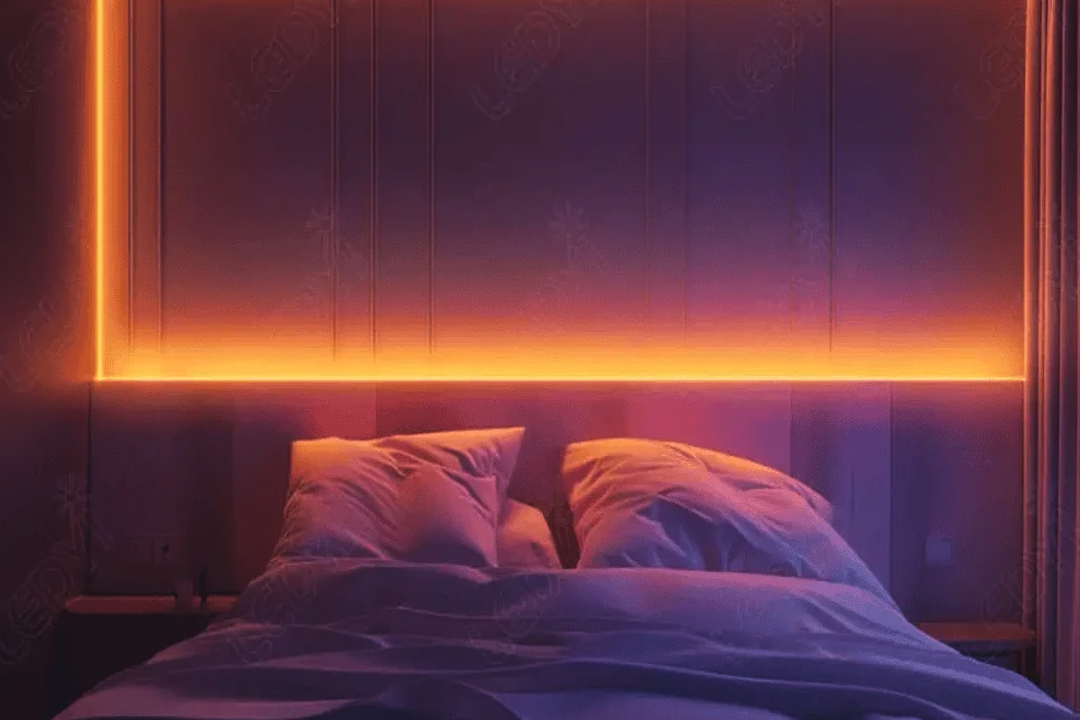
- Soft Glow: Unlike overhead fixtures that cast harsh, direct light, under-bed LEDs create a gentle, diffused glow that can soften the overall feel of the room. This effect can make a space feel more inviting and less stark. Imagine it as a subtle curtain of light.
- Color Customization: With RGB or RGBW strips, you can select colors that match your mood or décor. A warm yellow or orange can evoke a cozy, relaxed feeling, while cool blues or greens might promote a sense of calm. This ability to paint the room with light allows for dynamic changes to the emotional temperature of the space.
- Architectural Feature: The lighting can subtly highlight the bed as a central piece of furniture, drawing attention to its lines without making it overly conspicuous. It serves as a visual anchor in the room.
Practical Applications
Beyond aesthetics, under-bed lighting serves several practical functions.
- Night Lighting: When getting out of bed in the dark, the soft illumination provides enough light to navigate safely without fully awakening. This is particularly useful for late-night trips to the bathroom or for parents tending to children. The low intensity avoids the jarring effect of bright overhead lights at night.
- Reduced Glare: For tasks like reading or watching TV in bed, an under-bed light can provide supplementary illumination without creating reflections on screens or shining directly into your eyes. It acts as a gentle fill light.
- Space Perception: The light emanating from beneath the bed can create an illusion of the bed floating, visually expanding the room. This effect can be particularly beneficial in smaller bedrooms, making them feel less enclosed.
Sleep and Wellbeing
The relationship between light and human well-being, especially sleep, is well-documented.
- Circadian Rhythm Support: Exposure to bright, cool-toned light in the evening can disrupt the body’s natural circadian rhythm, inhibiting melatonin production and making it harder to fall asleep. Under-bed LED lighting, especially when set to warm, low-intensity colors, can provide sufficient illumination without interfering with sleep preparation. Imagine it as a gentle winding-down signal to your body.
- Reduced Eye Strain: In dimly lit rooms, reading from a screen or book can strain your eyes. A soft, indirect light source like under-bed LEDs can reduce the contrast between your activity and the ambient room light, thereby minimizing eye fatigue.
- Psychological Comfort: For some, a completely dark room can feel unsettling. The subtle glow from under-bed lighting can provide a sense of security and comfort, mitigating feelings of unease without being overly stimulating.
Maintenance and Troubleshooting
Like any electronic installation, under-bed LED lighting benefits from occasional maintenance and may require troubleshooting.
Cleaning and Care
LED strips generally require minimal maintenance.
- Dust Removal: Periodically wipe the LED strips and power adapter with a dry, soft cloth to remove dust accumulation, which can hinder light output and potentially cause slight overheating if severe.
- Inspecting Adhesion: Check the adhesive backing occasionally to ensure the strips remain firmly attached, especially in areas with frequent movement or temperature fluctuations. Re-secure any loose sections with additional adhesive or mounting clips.
- Avoiding Liquids: As most LED strips are not waterproof (unless specifically rated for outdoor use), avoid direct contact with liquids. If a strip becomes wet, disconnect power immediately and allow it to dry completely before re-applying power.
Common Issues and Solutions
Addressing common problems effectively ensures the longevity and performance of your lighting setup.
- Flickering Lights: This can be caused by a loose connection, an overloaded power supply, or a faulty strip. First, ensure all connections are secure. If flickering persists, try a different power supply if available, or isolate sections of the strip to identify a faulty segment.
- Inconsistent Brightness/Color: If sections of the strip are dimmer or display incorrect colors, it often indicates a power drop along the strip (especially on long runs) or damage to individual LEDs. For power drop, consider injecting power at both ends or at intervals along a long strip. For damaged LEDs, the affected segment may need to be cut out and replaced or bypassed.
- Remote Control Not Working: Check the battery in the remote. For IR remotes, ensure there’s a clear line of sight to the receiver. For RF or Bluetooth remotes, check for communication interference or ensure the controller is paired correctly. A reset of the controller may also resolve the issue.
- Lights Not Turning On: Verify the power supply is plugged in and receiving power from the outlet. Check all connections from the power supply to the controller and then to the LED strip. A tripped circuit breaker or a faulty power adapter are also possibilities. Ensure the power button on the remote or controller is pressed.
Advanced Customization and Integration
For those seeking more sophisticated control and expanded functionality, under-bed LED lighting can be integrated into broader smart home ecosystems.
Smart Home Integration
Many modern LED controllers are compatible with smart home platforms, offering centralized control.
- Voice Assistants: Integrate the lighting with voice assistants like Amazon Alexa, Google Assistant, or Apple HomeKit. This allows for voice commands to turn lights on/off, change colors, adjust brightness, or activate predefined scenes. “Alexa, set bed lights to ‘relax’ mode.”
- Home Automation Routines: Create automated routines that incorporate the under-bed lighting. For example, a “good morning” routine could gradually brighten the lights as part of a wake-up sequence, while a “good night” routine could dim them slowly after a set time.
- IFTTT (If This Then That): Use IFTTT recipes to connect your under-bed lighting to other smart devices or web services. For instance, you could set the lights to change color when you receive a new email from a specific sender, or to turn on when your smart door lock detects you’ve arrived home.
DIY Enhancements and Accessories
Creative users can further personalize their under-bed lighting setup.
- Diffuser Channels: For a more polished and diffused light output, LED aluminum channels with frosted covers can be installed. These channels hide the individual LED dots, creating a continuous line of light, and also protect the strips from dust and damage. Visualize it as smoothing out the light’s texture.
- Customization of Motion Sensing: Experiment with the placement and sensitivity of motion sensors. Some sensors allow adjustment of detection range or ambient light thresholds, ensuring the lights activate only when needed and do not respond to minor movements in an adjacent room.
- Sync with Music/Media: Certain advanced controllers allow LED strips to synchronize with music or media being played in the room, creating dynamic light shows that react to audio rhythm and volume. This converts the lighting from passive ambiance to an interactive element.
By understanding the types of lighting available, planning installation carefully, and considering both aesthetic and functional benefits, individuals can effectively implement under-bed LED strip lighting to optimize their bedroom environment. Its versatility in ambiance, practical applications, and potential for smart home integration positions it as a valuable addition to modern living spaces.