Thinking about jazzing up your dining room? A fabric chandelier might be just the thing. It’s a surprisingly versatile option that can add a touch of elegance, warmth, and personality without feeling over the top. Forget those stiff, formal chandeliers; fabric versions offer a softer, more inviting vibe that can really transform your space.
The Allure of Fabric Chandeliers
Why fabric, you ask? Well, traditional chandeliers often feel a bit… intense. They can be heavy, ornate, and sometimes a little intimidating. Fabric chandeliers Hozo, on the other hand, bring a different kind of drama. They diffuse light beautifully, creating a cozy and sophisticated atmosphere. Imagine a soft glow emanating from a beautifully draped fabric shade; it’s instantly more welcoming for dinner parties or casual family meals.
The appeal lies in their ability to be both a statement piece and a subtle enhancer. They can be the focal point of your room, drawing the eye with their unique texture and form, or they can blend in seamlessly, adding a layer of refinement without dominating the decor. It’s like choosing a luxurious scarf over a rigid collar – comfortable, stylish, and adaptable.
Choosing the Right Fabric Chandelier Style
This is where things get interesting. Fabric chandeliers aren’t a one-size-fits-all deal. There’s a surprising amount of variety, and picking the one that fits your dining room’s personality is key.
Drum Shades: Classic and Clean
The drum shade is probably the most familiar fabric chandelier style. It’s straightforward, elegant, and works with almost any decor.
Modern Minimalism
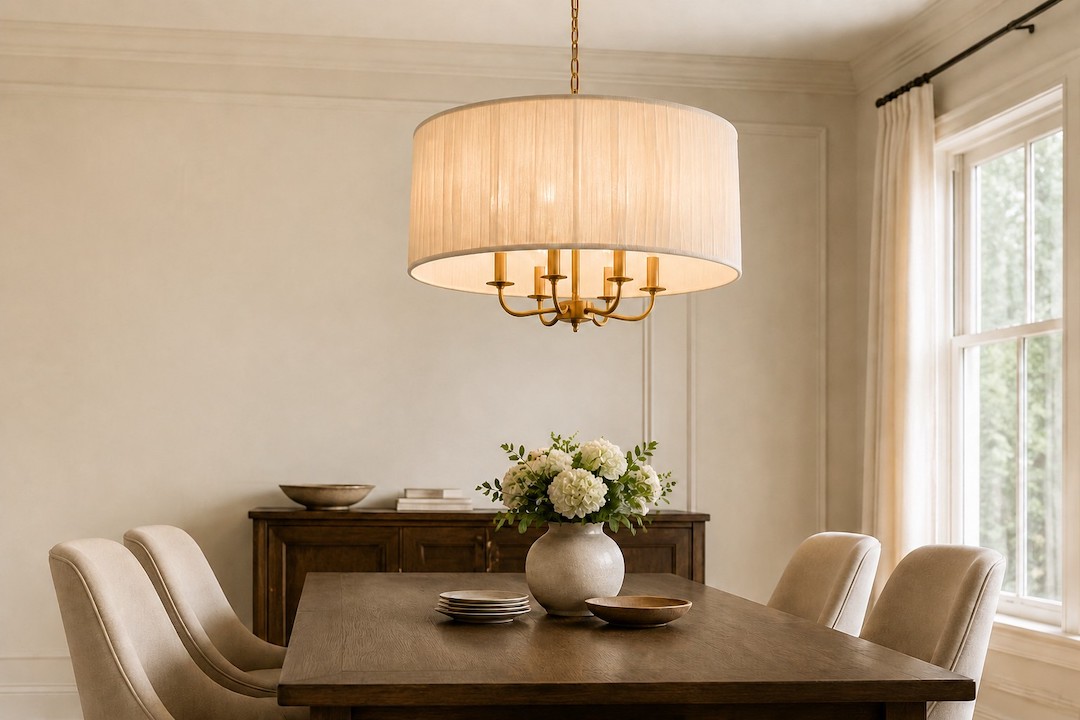
For a clean, contemporary look, opt for a drum shade in a neutral color like white, ivory, or a muted gray. The simplicity of the design speaks volumes, and the fabric diffuses light beautifully, preventing glare.
Bohemian Rhapsody
If you’re going for a more bohemian vibe, think about drum shades in textured fabrics like linen or even a subtly patterned grosgrain. Fringe or tassel details can add an extra layer of personality.
Traditional Touch
Even traditional dining rooms can benefit from a drum shade. Choose richer fabrics like silk or velvet in deeper colors to add a touch of old-world charm.
Bell and Empire Shades: A Touch of Sophistication
These shades offer a more classic silhouette, often associated with a more formal or traditional aesthetic.
Empire Elegance
Empire shades are wider at the bottom than the top, creating a stately look. They’re often made from silk or a similar refined fabric, perfect for a formal dining room.
Bell-Shaped Beauty
Bell-shaped shades have a gentle curve that tapers downwards. They can add a touch of softness and grace, suitable for both traditional and transitional dining spaces.
Unique and Sculptural Designs: Beyond the Basic
The world of fabric chandeliers extends beyond simple shades. Many designers are creating artistic pieces that are more like fabric sculptures.
Drape and Cascade
Some chandeliers feature draped fabrics, creating flowing lines and a sense of movement. These can be incredibly dramatic and make a strong artistic statement.
Layered and Textured
Look for chandeliers with multiple layers of fabric, interwoven textures, or even intricate pleating. These add depth and visual interest, turning the lighting fixture into a true art piece.
Material Matters: What Your Fabric Chandelier is Made Of
The fabric itself plays a huge role in the chandelier’s overall look, feel, and light diffusion.
Common Fabric Choices and Their Impact
Different fabrics offer different aesthetics and light properties.
Linen: Natural and Textural
Linen is a fantastic choice for a relaxed yet sophisticated feel. It has a natural texture that adds warmth and depth, and it diffuses light softly. It’s versatile enough for both casual and more formal settings.
Silk: Luxurious and Luminous
Silk instantly elevates a space. It has a subtle sheen that catches the light beautifully, adding a touch of luxury. Silk shades are ideal for more formal dining rooms and create a very soft, inviting glow.
Cotton: Versatile and Accessible
Cotton is a workhorse fabric. It’s durable, comes in a vast array of colors and patterns, and can be found in various textures. It’s a great option for a more budget-friendly yet stylish choice.
Velvet: Rich and Opulent
For a truly opulent look, velvet is unmatched. It absorbs light, creating a deep, rich hue and a sense of plushness. Velvet chandeliers are perfect for adding glamour and warmth to a dining room.
The Importance of Flame Resistance
This is a crucial point for any lighting fixture, especially one made of fabric. Always ensure the fabric used in your chandelier is treated to be flame-resistant. Reputable manufacturers will clearly state this.
How Fabric Chandeliers Impact Dining Room Ambiance
It’s not just about looks; fabric chandeliers do wonders for the atmosphere of your dining room.
Softening the Light: The Diffuser Effect
One of the biggest advantages of a fabric chandelier is its ability to diffuse light.
This means no harsh glare, just a soft, even glow that’s perfect for dining.
The fabric acts as a natural diffuser, turning potentially stark overhead light into something warm and inviting.
Creating Warmth and Coziness
The texture and presence of fabric inherently add a sense of warmth to a room.
Unlike metal or glass, fabric feels more approachable and comforting.
This makes your dining room feel cozier and more conducive to lingering conversations.
Adding Color and Pattern
Fabric chandeliers are a brilliant way to introduce color or pattern into your dining room without overwhelming the space.
A brightly colored shade can be a playful accent, while a subtle pattern can add visual interest.
This is especially useful if your walls or furniture are neutral.
Practical Considerations and Installation
Beyond aesthetics, there are practicalities to consider when bringing a fabric chandelier into your dining room.
Sizing Your Chandelier: The Golden Rule
The size of your chandelier should be proportionate to your dining table and the room itself.
A common guideline is to have the widest part of the chandelier be about two-thirds the width of your dining table.
However, consider ceiling height as well. A very large chandelier in a low-ceilinged room can feel overwhelming.
Placement Above the Table
The ideal placement is centered above the dining table, providing even light for everyone seated.
It should hang at a height that doesn’t obstruct views across the table or bump heads.
A good rule of thumb is about 30-36 inches from the tabletop to the bottom of the chandelier.
Installation Basics
While professional installation is always recommended for safety and peace of mind, understanding the basics is helpful.
Most chandeliers require basic electrical wiring and mounting to a ceiling junction box.
If you’re comfortable with DIY electrical work, ensure you follow all building codes and safety precautions.
Maintenance and Cleaning
Fabric requires a bit more care than metal or glass.
Regular dusting with a soft brush or a vacuum cleaner’s upholstery attachment is usually sufficient.
For spills or more significant marks, spot-cleaning with a mild detergent and a damp cloth is often effective, but always test on an inconspicuous area first. Some fabrics may require professional cleaning.
Where to Find Your Perfect Fabric Chandelier
The selection of fabric chandeliers has expanded significantly, giving you plenty of options to explore.
Online Retailers: Convenience and Variety
Websites like Wayfair, Overstock, Etsy, and Anthropologie offer a vast array of fabric chandeliers.
You can filter by style, color, material, and price, making it easy to narrow down your choices.
Etsy is particularly good for unique, handmade, or customizable options.
Specialty Lighting Stores: Expert Advice
Local lighting showrooms can be invaluable.
They often have a curated selection and knowledgeable staff who can offer personalized advice.
It’s also a great opportunity to see the quality of the fabric and construction up close.
Interior Design Shops: Curated Collections
Many interior design stores and boutiques carry a selection of stylish fabric chandeliers.
These are often sourced with a keen eye for trends and quality, offering more unique finds.
Integrating Fabric Chandeliers into Different Dining Room Styles
A fabric chandelier isn’t just for one type of decor. They can adapt beautifully to various aesthetics.
Modern Dining Rooms
In a modern setting, choose clean-lined drum shades or minimalist designs in neutral or bold geometric patterns. The fabric adds a softer contrast to sleek furniture.
Traditional Dining Rooms
For a more classic look, opt for bell or empire shades in silk or velvet. Rich jewel tones or muted neutrals will complement ornate furniture and formal settings.
Transitional Dining Rooms
This style bridges modern and traditional. A fabric chandelier with a classic shape but a contemporary fabric, or vice-versa, often works best. Think of a drum shade in a subtly textured linen.
Bohemian Dining Rooms
Embrace texture, color, and pattern. Chandeliers with fringe, tassels, or richly patterned fabrics like embroidered cotton or even dyed linen will fit right in.
Farmhouse Dining Rooms
Linen or natural cotton drum shades in off-white or cream are ideal. A slightly distressed fabric or one with a subtle weave can enhance the rustic charm.
By considering the style, material, size, and placement, a fabric chandelier can easily become the heart of your dining room, offering not just light, but also warmth, personality, and an undeniable touch of elegance. It’s a practical way to elevate your space and create a more inviting atmosphere for every meal.