This article examines modern geometric pendant lighting, exploring its evolution, design principles, material applications, and practical considerations as a contemporary interior design element. Readers will gain an understanding of the impact these fixtures have on spatial aesthetics and functionality.
Pendant lighting, a fixture suspended from the ceiling by a rod or chain, has a long history, dating back to early forms of illumination. Initially purely functional, these lights Um4u have evolved significantly, transitioning from rudimentary oil lamps to gas lights, and then to electric fixtures. The 20th century, particularly with the rise of modernism, marked a pivotal shift in lighting design. Designers began to explore lighting not just as a source of light, but as an integral part of interior architecture and an aesthetic object in its own right.
Geometric forms, characterized by their mathematical precision and clean lines, have been a recurring motif in art and architecture for millennia. From the pyramids of ancient Egypt to the intricate patterns of Islamic art, and the foundational principles of Bauhaus design, geometry offers a sense of order, balance, and often, simplicity. Modern geometric pendant lighting emerged from this confluence, marrying the function of overhead illumination with the aesthetic power of geometric shapes. Designers, influenced by movements like Cubism and De Stijl, started to distill forms to their basic components: circles, squares, triangles, and their three-dimensional counterparts like cubes, spheres, and prisms. This reductionist approach sought to remove superfluous ornamentation, focusing instead on the inherent beauty and structural integrity of geometric arrangements.
Defining Modern Geometric Pendant Lighting
Modern geometric pendant lighting is characterized by several key attributes. These fixtures prioritize form, often utilizing basic geometric shapes or complex arrangements of these shapes to create a visual statement. The emphasis is on clean lines and structures, rather than ornate detailing or traditional motifs.
Core Design Principles
The underlying principles of modern geometric pendant lighting revolve around clarity, balance, and intentionality.
Simplicity and Minimalism
A hallmark of this design trend is its commitment to simplicity. Fixtures often feature unadorned surfaces and straightforward shapes. This minimalist approach aims to reduce visual clutter, allowing the form of the light fixture itself to be the dominant feature. The absence of excessive embellishment means that the quality of materials and the precision of craftsmanship become more apparent. Consider a single sphere or a perfectly formed cube; their impact stems from their fundamental purity. In a minimalist interior, such a pendant can serve as a focal point without overwhelming the space, acting as an anchor in a sea of understated elements.
Abstract Forms and Sculptural Qualities
Many modern geometric pendants transcend mere functionality, becoming sculptural elements within a room. Designers often employ abstract arrangements of geometric volumes, creating installations that command attention even when unlit. These fixtures can resemble kinetic sculptures or architectural models, adding an artistic dimension to the space. Imagine a cluster of interconnected polyhedra, or a series of concentric rings suspended at varying heights. These aren’t just light sources; they are visual statements, much like a piece of abstract art or a contemporary sculpture displayed on a pedestal. They invite contemplation and introduce a sense of dynamic energy.
Emphasis on Line and Structure
The skeletal framework of these pendants often takes precedence. Thin metal rods, wires, or profiles are frequently used to define the geometric boundaries, creating a sense of transparency and lightness. The lines themselves become design elements, guiding the eye and delineating space. This emphasis on structure can lead to open-caged designs where the light source itself is visible, or partially obscured, playing with the interplay of light and shadow. Think of the intricate yet sparse framework of a geodesic dome, scaled down and inverted to house a light source. The strength and beauty lie in the visible engineering.
Materials and Finishes in Contemporary Design
The choice of materials and finishes plays a crucial role in defining the aesthetic and functional properties of modern geometric pendant lighting. These selections not only influence the fixture’s visual appeal but also its durability and how it interacts with light.
Common Material Choices
Diverse materials are employed, each contributing distinct characteristics to the final product.
Metals
Metals are a primary material in modern geometric pendant lighting due to their strength, malleability, and ability to be finished in various ways. Steel, particularly powder-coated steel, offers durability and a clean, consistent finish, often in matte black, white, or various muted tones. Brass and copper, available in polished, brushed, or aged finishes, bring warmth and a touch of classic elegance or industrial chic, depending on the treatment. Their ability to develop a patina over time is also appreciated by some designers. Aluminum is chosen for its lightweight properties and corrosion resistance, useful for larger or outdoor applications. The use of minimalist metal frames emphasizes the geometric form without adding visual weight, acting as a skeletal system for the light source.
Glass
Glass, in various forms, is frequently integrated. Clear glass reveals the light source, offering bright, unobstructed illumination. Frosted or etched glass diffuses the light, creating a softer, more ambient glow and reducing glare. Smoked or tinted glass can add a dramatic effect, casting colored light or creating a more subdued atmosphere. Hand-blown glass forms can also introduce subtle organic variations within a precise geometric structure, a juxtaposition that can be visually compelling. The material itself becomes a lens, shaping the light as a sculptor shapes clay.
Wood
While less common for the primary structural element than metal, wood is increasingly used in combination with other materials to introduce warmth and natural texture. Light-toned woods like maple or birch, or darker woods such as walnut, can be precisely cut and joined to form geometric shapes. Wood veneers can also be used to wrap metal structures, blending the strength of metal with the natural aesthetic of wood. The contrast of natural wood grain against the stark precision of geometric lines creates a harmonious tension.
Concrete and Composite Materials
Concrete, often associated with industrial and brutalist aesthetics, can be cast into geometric forms for a robust, tactile pendant. Its raw, unfinished appearance is a defining characteristic. Composites, such as resin or polymer blends, offer flexibility in design, allowing for intricate shapes and translucent effects. These materials can mimic the appearance of other elements or present unique textures and finishes. Consider a pendant where concrete forms the core, while slender metal rods extend outwards, creating a delicate cage.
Finish Options and Their Impact
The finish applied to these materials significantly alters the fixture’s presence within a space.
Matte and Satin Finishes
Matte finishes absorb light rather than reflecting it, creating a soft, understated presence. Matte black, gray, and white are popular choices, aligning with minimalist design principles. These finishes reduce glare and allow the geometric form itself to stand out without competing with high reflections. Satin finishes offer a subtle sheen, a compromise between matte and high-gloss, providing a touch of refinement without being overtly reflective.
Polished and Mirrored Finishes
Polished metals like chrome or brass reflect light intensely, creating a sense of glamour and sophistication. These finishes can make a pendant a striking focal point, particularly in spaces aspiring to a luxurious or art deco aesthetic. Mirrored surfaces can also be integrated, expanding the perception of space and interacting dynamically with ambient light, much like a prism catching sunlight. A highly polished brass pendant, for example, can become a beacon, sending out sparks of light and drawing the eye.
Industrial and Textured Finishes
Raw, unfinished, or intentionally distressed finishes evoke an industrial or vintage feel. Brushed metals, oxidized surfaces, and sandblasted treatments add texture and character. These finishes celebrate the material’s inherent qualities and often align with industrial, rustic, or eclectic design schemes. A pendant with a brushed steel finish might feel sturdy and grounded, while one with an oxidized copper finish tells a story of time and elemental exposure.
Functional Considerations and Lighting Quality
Beyond their aesthetic appeal, modern geometric pendant lights must address fundamental functional aspects, primarily the quality and direction of the light they produce. Their design significantly influences how light is distributed and perceived in a space.
Light Distribution and Directionality
The shape and construction of a geometric pendant directly impact the spread and focus of light. Unlike general ambient lighting, pendants often offer more localized illumination.
Downlighting
Many geometric pendants are designed to provide direct downlighting, creating a concentrated pool of light on a surface below. This is particularly useful over dining tables, kitchen islands, or workspaces. Consider a pendant with a solid, opaque top and open bottom, or one with a downward-facing LED array. This focused illumination can highlight specific areas or objects, much like a spotlight on a stage, drawing attention and defining zones within a larger room. The beam can be wide or narrow, depending on the internal reflectors and the angle of the light source.
Uplighting
Less common in pendants but present in some designs, uplighting directs light towards the ceiling. This creates a softer, more diffuse ambient light as the light bounces off the ceiling surface. Pendants with open tops or internal deflectors that send light upwards can achieve this effect. Uplighting can make a room feel larger and more open, reducing harsh shadows. It’s like using a soft-focus lens on a camera, gently illuminating the entire scene.
Diffused and Ambient Lighting
Pendants incorporating frosted or opal glass, or open frame designs that allow light to escape in multiple directions, provide more diffused and ambient illumination. This type of lighting is less about focused task lighting and more about creating an overall glow and atmosphere. A pendant using an exposed globe bulb within an open wireframe, for instance, casts a gentle, all-around luminescence, blurring the edges of objects and softening the room’s contours. It’s like witnessing a soft dawn breaking, rather than a sharp midday sun.
Directional Adjustability
Some sophisticated geometric pendants offer adjustable elements, allowing the user to precisely direct light. This might involve swiveling heads, rotatable segments, or magnetic attachments for individual light modules. Such flexibility enhances the functionality of the fixture, enabling it to adapt to changing needs, whether for task lighting or accent lighting. This adaptability makes the pendant a versatile tool, capable of fulfilling various roles.
Luminaire Specifications
Understanding key lighting specifications is essential for selecting the appropriate pendant.
Lumen Output
Lumen output refers to the total amount of visible light produced by a bulb or fixture. It directly relates to the brightness of the light. For task lighting over a kitchen island, a higher lumen output might be desired, while for ambient lighting in a bedroom, a lower lumen output might be more appropriate. It’s the engine’s horsepower for light.
Color Temperature (Kelvin)
Color temperature, measured in Kelvin (K), describes the warmth or coolness of the light. Lower Kelvin values (e.g., 2700K-3000K) produce warm white light, often perceived as cozy and inviting. Higher Kelvin values (e.g., 4000K-5000K) produce cool white or daylight-mimicking light, which can promote alertness and is often preferred for workspaces. Selecting the correct color temperature is like choosing the appropriate filter for a camera, setting the emotional tone.
Color Rendering Index (CRI)
CRI measures how accurately a light source renders the colors of objects compared to natural light. A CRI of 80 or higher is generally considered good for residential use, while a CRI of 90+ is excellent and important for spaces where accurate color perception is crucial, such as art studios or dressing areas. A high CRI ensures that the colors in your room appear true and vibrant.
Dimmability
Many modern geometric pendants are compatible with dimmable bulbs and dimming switches. Dimmability offers flexibility, allowing users to adjust light levels to suit different moods or activities. The ability to dim a light is like controlling the volume of a sound, adjusting its intensity to match the moment.
Placement and Integration in Interior Design
The successful integration of modern geometric pendant lighting into an interior space transcends mere selection; it involves strategic placement and understanding its interaction with other design elements.
Strategic Placement for Impact
The location of a pendant light is critical to its effectiveness, both functionally and aesthetically.
Over Dining Tables and Kitchen Islands
This is perhaps the most common application. A singular, bold geometric pendant or a linear arrangement of multiple smaller pendants can define the eating or preparation zone. When hanging above a dining table, the fixture should ideally be positioned so that the bottom is approximately 30-36 inches above the tabletop, ensuring sufficient light without obstructing views or causing glare. This placement creates a sense of intimacy and highlights the activity occurring below, much like a stage light on a performer. In a kitchen, a row of identical geometric pendants over an island provides focused task lighting while also offering a strong visual statement.
Entryways and Foyers
In entryways, a striking geometric pendant can serve as a welcoming focal point, setting the design tone for the entire home. Here, the scale is important; the fixture should command attention without overwhelming the space, especially if the ceiling is high. A multi-faceted or open-caged geometric design can cast interesting shadows, adding depth and intrigue. It’s the handshake of the house, a first impression.
Living Rooms and Bedrooms
While living rooms often rely on layered lighting, a geometric pendant can act as a central ambient light source or an artistic accent. In a lofty living space, a large-scale geometric pendant can fill vertical volume, becoming a sculptural element above a seating area. In bedrooms, smaller, more subdued geometric pendants can flank a bed in place of traditional table lamps, freeing up nightstand space and offering a contemporary aesthetic. This creates a balanced, uncluttered look. It is an architectural jewel, adorning the space.
Stairwells and Double-Height Spaces
In areas with significant verticality, such as stairwells or double-height living rooms, a dramatic, elongated geometric pendant or a cluster of varied shapes and sizes can draw the eye upwards, emphasizing the architectural grandeur of the space. Such placements transform a functional light source into a vertical art installation, much like a chandelier but with a modern, structured precision.
Harmonizing with Interior Styles
Geometric pendants are versatile, capable of complementing a range of interior design styles.
Contemporary and Modern Interiors
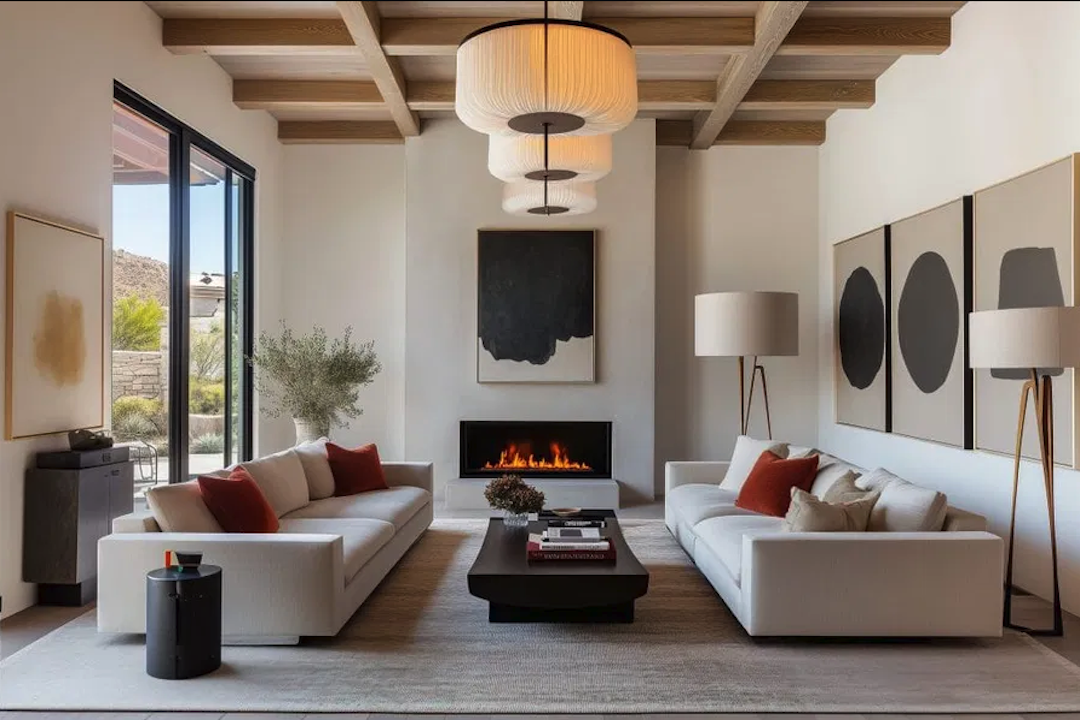
This is their natural habitat. In contemporary and modern settings, geometric pendants reinforce the aesthetic of clean lines, minimalist forms, and a sophisticated approach to design. They blend seamlessly with modern furniture, neutral color palettes, and open-plan layouts. They are the punctuation mark in a modern design sentence.
Industrial and Loft Spaces
In industrial interiors, geometric pendants with exposed bulbs, metal cages, or rustic finishes can enhance the raw, utilitarian aesthetic. Their structured forms can provide a counterpoint to exposed brick, concrete, and metal accents. A pendant made of black steel rods, for instance, perfectly aligns with the integrity and honesty of an industrial design.
Mid-Century Modern Revivals
Geometric patterns and shapes were central to Mid-Century Modern design. Pendants from this period often feature Sputnik-like forms, multi-arm designs, or layered geometric elements. Contemporary geometric pendants can draw inspiration from these designs, offering a fresh take on a classic aesthetic, fitting well with teak wood, organic forms, and bold color accents.
Bohemian and Eclectic Mixes
Surprisingly, geometric pendants can also find a place in bohemian or eclectic interiors. When paired with softer textures, natural materials, and a curated mix of global influences, a geometric pendant can introduce a touch of structural order and contemporary edge, preventing the space from becoming overly chaotic. It is the steady beat in a syncopated rhythm.
Maintenance and Durability
The longevity and continued aesthetic appeal of modern geometric pendant lighting depend on proper care and consideration of material durability.
Cleaning and Care Guidelines
General cleaning practices apply to most fixtures, with specific considerations for materials.
Regular Dusting
For all materials, regular dusting with a soft, dry cloth or a duster is essential to prevent dust buildup, which can dim the light output and make the fixture appear dull.
Metal Finishes
For polished metals, a soft, damp cloth with a mild, non-abrasive cleaner can be used, followed by immediate drying to prevent water spots or tarnishing. Brushed metals should be wiped in the direction of the grain. Abrasive cleaners or harsh chemicals should be avoided as they can damage the finish. For brass and copper, periodic polishing with specific metal polish may be necessary to maintain a bright finish, depending on whether a patina is desired or not.
Glass Components
Glass shades or diffusers can be cleaned with standard glass cleaner and a lint-free cloth. Care should be taken to avoid spraying cleaner directly onto electrical components. Removable glass elements can often be washed with warm soapy water and dried thoroughly.
Wood and Concrete
Wood components typically require dusting, and occasional polishing with a wood-specific cleaner or oil to retain their luster and prevent drying. Concrete can be wiped with a damp cloth; avoid harsh scrubbing that could damage any protective sealants.
Durability Considerations by Material
The inherent properties of the chosen materials contribute to the fixture’s overall durability.
Metals
High-quality steel, brass, and aluminum are inherently durable and resistant to impact. Powder-coated finishes offer excellent scratch and chip resistance, prolonging the aesthetic life of the fixture. Stainless steel is particularly resistant to corrosion, making it suitable for more humid environments, though not typically the primary choice for indoor geometric pendants. The structural integrity of metal frames ensures that geometric forms hold their shape over time.
Glass
Glass, while beautiful, is susceptible to breakage from impact. However, tempered glass, when used, offers increased strength and safety. The quality of the glass, its thickness, and how it is secured within the fixture all contribute to its robustness.
Wood
The durability of wood depends on its type and finish. Hardwoods are generally more resilient than softwoods. Proper sealing and finishing protect wood from moisture and environmental stressors, extending its lifespan. Warping or cracking can occur if exposed to extreme humidity or dryness.
Concrete and Composites
Concrete is extremely durable and resistant to wear and tear, though it can be heavy. Its porous nature often requires sealing to prevent staining. Composite materials are designed for specific performance characteristics, such as impact resistance or UV stability, making them robust according to their intended application. The manufacturing process of these materials allows for precise geometric forms that maintain their integrity.
In conclusion, modern geometric pendant lighting represents a significant trend in contemporary interior design. By understanding its evolution, defining characteristics, material science, functional aspects, and strategic integration, readers are equipped to make informed decisions about incorporating these sculptural and functional elements into their spaces. These fixtures act as both beacons and anchors, illuminating rooms while simultaneously defining their aesthetic and formal boundaries.