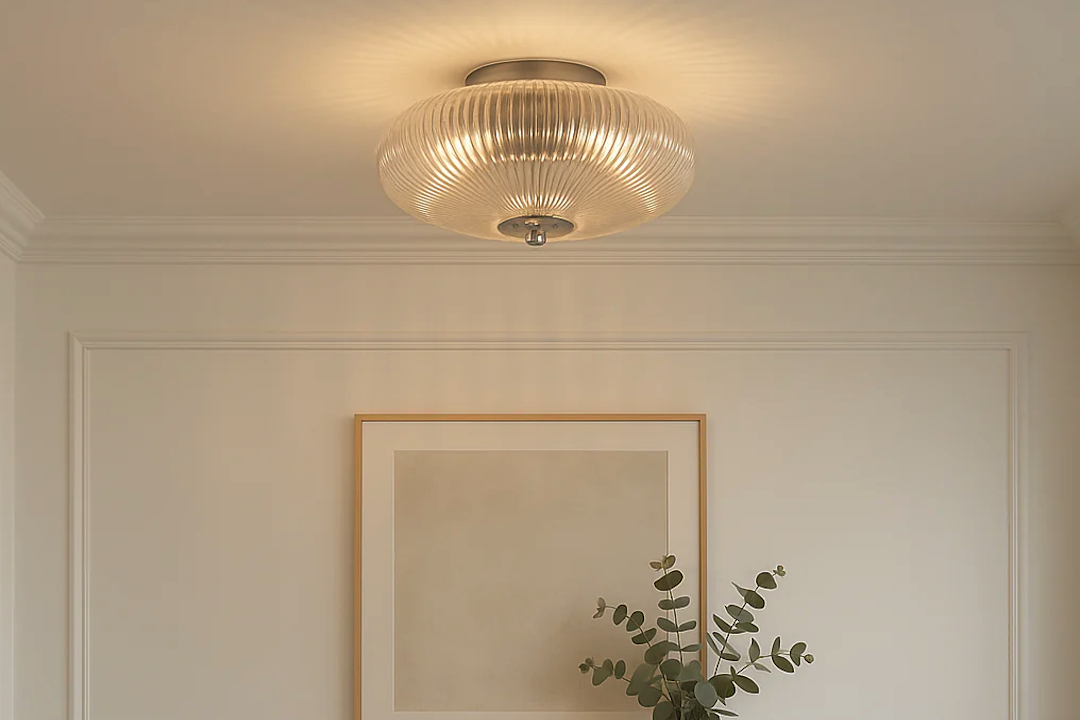
When it comes to illuminating an apartment hallway, a modern ribbed glass ceiling light is an excellent choice. It offers a blend of style and function that can significantly elevate the feel of what can often be a neglected space. These fixtures provide a soft, diffused light, perfect for transitions between rooms, and their ribbed texture adds a subtle touch of elegance without being over-the-top.
Why Ribbed Glass Works Well in Hallways
Hallways are, by their nature, often narrow and without natural light. This makes thoughtful illumination crucial. Ribbed glass diffuses light Akahome beautifully, preventing harsh glares and creating a more inviting atmosphere. The texture itself adds visual interest, transforming a simple light fixture into a decorative element.
Modern ribbed glass isn’t just about diffusing light; it’s a design statement. It offers a sophisticated texture that can complement various interior design styles, from minimalist to industrial chic. The subtle lines and patterns created by the ribbing add a layer of depth that plain glass often lacks.
Blending with Contemporary Decor
If your apartment leans towards contemporary design, a ribbed glass fixture will fit right in. Its clean lines and understated elegance align perfectly with modern aesthetics that prioritize function and subtle style. Think brushed metals, muted color palettes, and uncluttered spaces – ribbed glass effortlessly complements these elements.
A Touch of Industrial Flair
For those who appreciate an industrial edge, ribbed glass can introduce a factory-inspired feel without being overly stark. When paired with matte black or bronze hardware, it evokes a sense of crafted utility, a nod to early 20th-century design. This can be great for apartments with exposed brick or concrete accents.
Enhancing Transitional Styles
Even in more transitional settings, where traditional and modern elements meet, ribbed glass can play a unifying role. Its classic texture, updated with sleek modern mounts, bridges the gap between different design languages. It provides a familiar comfort with a contemporary twist.
Practical Benefits for Apartment Living
Beyond aesthetics, modern ribbed glass ceiling lights bring a host of practical advantages, particularly in the unique context of apartment living. These benefits address common challenges like space constraints, varying ceiling heights, and the need for efficient lighting.
Maximizing Light Diffusion
One of the primary benefits of ribbed glass is its ability to diffuse light effectively. Instead of a direct, harsh beam, you get a softer, more even spread of illumination.
- Minimizing Glare: Direct light can be jarring, especially in a narrow hallway. Ribbed glass breaks up the light, reducing glare and making the space feel more comfortable. This is particularly important for late-night trips to the kitchen or bathroom.
- Creating a Welcoming Ambiance: Diffused light has a way of warming a space. It creates a softer, more inviting atmosphere than sharply focused light, making your hallway feel less like a corridor and more like an extension of your home.
Optimizing for Hallway Dimensions
Apartment hallways are often compact, and choosing the right fixture size and style is crucial.
- Low-Profile Designs: Many modern ribbed glass ceiling lights come in flush-mount or semi-flush-mount designs. These are ideal for hallways, especially those with standard or lower ceiling heights, as they don’t visually intrude on the limited vertical space.
- Effective Illumination in Narrow Spaces: The wide spread of light from a diffused fixture ensures that the entire length of a narrow hallway is adequately lit, avoiding dark spots that can make a space feel cramped or unsafe.
Durability and Maintenance Considerations
In an area with frequent foot traffic, fixtures need to be robust and easy to care for.
- Robust Construction: Quality ribbed glass fixtures are typically made with durable glass that can withstand minor impacts better than some delicate alternatives. The metal components are often powder-coated or finished for longevity.
- Ease of Cleaning: Glass is relatively easy to clean. A simple wipe-down with a damp cloth is usually sufficient to remove dust and fingerprints, keeping the fixture looking its best with minimal effort.
Understanding Different Types and Mounts
Modern ribbed glass ceiling lights aren’t a one-size-fits-all product. They come in various configurations, each with its own advantages, allowing you to choose the best fit for your specific hallway.
Flush Mount Fixtures
These are classic choices for hallways, particularly in apartments where ceiling height might be a concern.
- Seamless Integration: Flush mounts sit directly against the ceiling, creating a seamless, unobtrusive look. This is excellent for maintaining a clean aesthetic and preventing the light from feeling like it’s hanging too low.
- Ideal for Low Ceilings: If your apartment has standard 8-foot ceilings, or even slightly lower, a flush mount is the safest bet to ensure no one bumps their head and the room doesn’t feel visually compressed.
Semi-Flush Mount Fixtures
Semi-flush mounts offer a bit more visual presence than flush mounts without being as imposing as a pendant.
- Added Dimension: By hanging a few inches below the ceiling, semi-flush mounts add a subtle layer of dimension and often allow for a more decorative canopy or mounting plate.
- Versatile for Standard Ceilings: These work well in hallways with standard ceiling heights where you want a bit more design flair but still need to be mindful of space. They can cast a slightly more upward light, bouncing some off the ceiling, which can enhance the ambient glow.
Drum and Bowl Shapes
Beyond how they mount, ribbed glass fixtures come in various shapes that contribute to their overall aesthetic.
- Classic Drum Shapes: A drum-shaped fixture offers a clean, cylindrical profile. This often provides a wide, even spread of light and can feel contemporary and understated. The ribbed effect is particularly effective on a larger, curved surface.
- Elegant Bowl Designs: Bowl-shaped fixtures often have a slightly more traditional or art deco feel while still maintaining a modern edge with ribbed glass. They can direct light subtly downwards, which can be beneficial in certain hallway layouts.
Choosing the Right Bulb and Brightness
The fixture itself is only half the story; the bulb you choose significantly impacts the light quality and overall feel of your hallway. For modern ribbed glass ceiling lights, selecting the right bulb is about balancing aesthetics, energy efficiency, and desired ambiance.
LED is the Way to Go
When it comes to bulbs, LED is the clear winner for modern apartment living.
- Energy Efficiency: LEDs consume significantly less electricity than traditional incandescent bulbs, which translates to lower utility bills – a welcome perk in any apartment.
- Longevity: LEDs boast incredibly long lifespans, often lasting for tens of thousands of hours. This means less frequent bulb changes, which is especially convenient for ceiling fixtures that might require a step stool.
- Cooler Operation: Unlike incandescents, LEDs produce very little heat, making them safer and more efficient, especially in enclosed fixtures where heat can build up.
Color Temperature: Warm vs. Cool
The color temperature of your bulb (measured in Kelvin, K) is crucial for setting the mood.
- Warm White (2700K – 3000K): This range emits a soft, inviting yellowish light. It’s often preferred for residential spaces, creating a cozy and welcoming atmosphere that’s perfect for a hallway you want to feel like part of your home. It can also complement warmer paint colors and wood tones.
- Cool White (3500K – 4000K): This range is more neutral, providing a brighter, whiter light. While sometimes used in kitchens or workspaces for task lighting, it can feel a bit sterile for a hallway. However, if your apartment has very crisp, cool-toned decor, it might be an option. Generally, for a hallway, warm white is the safer and more pleasant choice.
Lumens and Dimming Capabilities
Brightness, measured in lumens, and the ability to dim are important considerations.
- Appropriate Lumens: For an average apartment hallway, you usually don’t need extremely bright lights. A bulb producing around 800-1000 lumens (equivalent to a 60-75W incandescent) is often sufficient for a single fixture, depending on the hallway’s length and width. For longer hallways, multiple fixtures or higher lumen output might be necessary.
- Dimmable Options: Having a dimmer switch allows you to adjust the light intensity based on your needs or the time of day. You might want brighter light for cleaning or finding something, while a softer glow is perfect for evening transitions. Ensure both your fixture (if applicable) and your chosen LED bulb are “dimmable” by checking their specifications.
Installation and Safety Tips
While installing a ceiling light isn’t typically complicated, it involves working with electricity, so taking proper precautions is essential. If you’re not comfortable with electrical work, it’s always best to hire a qualified electrician.
Before You Begin
Preparation is key to a smooth and safe installation.
- Turn Off Power: This is the most critical step. Locate the circuit breaker that controls the light fixture you’re replacing (or the one closest to the new installation point) and flip it to the “off” position. If you’re unsure, turn off the main breaker for your entire apartment. Test the wires with a non-contact voltage tester to confirm there’s no power.
- Gather Tools: You’ll typically need a screwdriver set (Phillips and flathead), wire strippers, electrical tape, possibly a drill, and a reliable step ladder.
- Read Instructions: Every fixture is slightly different. Carefully read the manufacturer’s installation instructions that come with your specific ribbed glass ceiling light, as they will contain important details and specific wiring diagrams.
The Installation Process (General Steps)
While specific steps vary, here’s a general overview:
- Remove Old Fixture (if applicable): Carefully disconnect the wiring from the old fixture and unscrew it from the ceiling junction box. Support the fixture as you disconnect it so it doesn’t fall.
- Mount the Mounting Bracket: The new fixture will come with a mounting bracket that attaches to the electrical junction box in your ceiling. Secure this bracket firmly.
- Wire the New Fixture: Connect the wires from your new ribbed glass light to the corresponding wires coming from the ceiling.
- Black to Black (Hot): This is the live wire.
- White to White (Neutral): This completes the circuit.
- Green/Bare Copper to Green/Bare Copper (Ground): This is a safety wire.
- Use wire nuts to secure the connections. Make sure they are tight and secure, and gently tug on each wire to ensure it won’t come loose.
- Secure the Fixture: Carefully push the wired fixture up against the mounting bracket and secure it according to the manufacturer’s instructions. This usually involves screwing it into the bracket or using decorative caps.
- Install the Glass Shade: Attach the ribbed glass shade to the fixture body. Be gentle, as glass can be fragile.
Safety Reminders
- Never Work on Live Wires: Always double-check that the power is off.
- Use Proper Ladder Safety: Ensure your ladder is stable and on firm ground. Don’t overreach.
- Consult a Professional: If you’re in doubt at any point, or if the wiring seems unusual, don’t hesitate to call a licensed electrician. It’s safer and cheaper in the long run than making a mistake.
- Check Local Codes: Some apartment buildings might have specific electrical codes or requirements.
- Don’t Over-Tighten: While you want the fixture to be secure, over-tightening screws, especially when dealing with glass, can lead to cracking.
By making a considered choice and ensuring safe installation, a modern ribbed glass ceiling light can truly transform your apartment hallway into a well-lit, aesthetically pleasing part of your home.